
'Even if there is a third wave or a fourth wave, it is hard to see the economy will suffer like that (during the first wave).'

The recent hike in the rates will hurt your finances further. Time to do some stock-taking.

The central bank has, so far, cut its repo rate by 125 bps.

Jaitley said inflation has been under control for long and is likely to remain so on the back of good monsoon and unlikely spike in oil prices.

The gains will be gradual as the measure will be executed over 12 months or so.
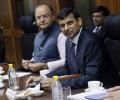
Official GDP data for the second quarter of the current fiscal year ending March are due to for release this Friday.

The Reserve Bank of India has kept the key short term lending rate (repo rate) unchanged at 7.25%.
The Reserve bank of India has just increased its repo rate and CRR and there are chances that banks may soon increase the interest rates on home loans.

However, some analysts say RBI Governor Raghuram Rajan may delay the rate cuts amid mounting concerns over the government's fiscal health.

Wholesale inflation fell to a 4-month low of 1.31 per cent in August due to a decline in prices of vegetables and fuel, even though onion and potato prices spiked, according to official data released on Tuesday. Wholesale price index-based inflation fell for the second straight month in August after it hit a high of 3.43 per cent in May. Inflation in July was 2.04 per cent. In August last year, WPI inflation was (-) 0.46 per cent.
Markets ended lower on Monday as investors turned cautious and booked profits ahead of the RBI monetary policy.

'People know if inflation is not within the tolerance band, then action will be taken so they do not expect inflation to rise above that.'

Investors' confidence has been revived in recent weeks on the likelihood the elections will usher in a new government.

To minimise risk, invest in a debt fund whose duration matches your investment timeframe.

RBI Governor Raghuram Rajan expressed anguish at the banks' reluctance to pass on benefits of the earlier rate cuts.

The government is set to ask PSBs to expeditiously introduce repo-rate linked products "to step up affordable credit".
Demonetisation to result in short-run disruptions in cash-intensive sectors like retail, hotels, restaurants and transportation, RBI said while announcing the Monetary Policy

There is a narrow chance that the central bank may cut rates in the future, according to a poll of 15 economists and treasurers.

Among the Sensex firms, ITC, Kotak Mahindra Bank, ICICI Bank, Nestle, Axis Bank, IndusInd Bank, UltraTech Cement, Bajaj Finance, Maruti and HDFC Bank were the major laggards.

Twelve of the 21 economists polled doubted whether the government could roll out the tax before the next fiscal year begins in April.

To neutralise this, RBI has been doing forward swaps

All-out efforts are needed to mitigate the adverse impact of the Covid-19 pandemic, and the RBI will use any instrument necessary to revive growth and preserve financial stability, according to the minutes of the central bank's policy meeting.
In the past few years, banks have been reducing the spread of retail loans for new customers while keeping the base rate unchanged.
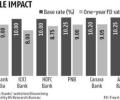
Lending rates in certain segments may be increased; fixed depositors may lock into existing rates.

Bajaj Finance was the top gainer in the Sensex pack, rising around 4 per cent, followed by Maruti, SBI, Bajaj Finserv, Sun Pharma and Asian Paints. NSE Nifty rallied 293.05 points to 17,469.75.

Among the Sensex constituents, 20 stocks ended the session in green with HDFC Bank, Titan, Tech Mahindra, and Asian Paints being the major gainers. TCS, Maruti, Kotak Mahindra Bank and Bajaj Finserve were the other gainers. In contrast, SBI, Bharti Airtel, JSW Steel, PowerGrid, ITC and Reliance closed the trading with losses.

Both the RBI and the central government should see that the transmission of the rate reduction by the banks happens soon, otherwise the whole exercise is futile, says Subramanian MV.

RBI's latest rate cut will bring down home, car loan's EMI.

RBI has brought down forecasts of both year-end inflation and growth.

Select the exact category by matching your investment horizon to the portfolio duration, suggests Sanjay Kumar Singh.
The supply-side driven inflationary pressures, from food or fuel prices, would be mitigated by a neutral stance and a prolonged pause on rates, says Gaurav Kapur.

The Reserve Bank on Friday retained the GDP forecast for the current financial year at 9.5 per cent and flagged global semiconductor shortages, elevated commodity prices and potential global financial market volatility as downside risks to economic growth. In his address after the three-day meeting of the rate-setting panel, RBI Governor Shaktikanta Das said recovery in aggregate demand gathered pace in August-September, and it is reflected in high-frequency indicators, like railway freight traffic; port cargo; cement production; electricity demand; e-way bills; GST and toll collections. "The ebbing of infections, together with improving consumer confidence, has been supporting private consumption," he said, and added the pent-up demand and the festival season should give further fillip to urban demand in the second half of the financial year.

'Some buyers believe prices may correct in the future.' 'This is unlikely. Many developers are increasing prices amid strong sales and inflationary trends.'

Bankers said high interest rate could make Indian economy sluggish given that inflation is around 5%

RBi pushes for reinvigorating private investments, clearing infra bottlenecks and providing big thrust to Pradhan Mantri Awas Yojana.

Maintaining 4 per cent inflation is appropriate for India as targeting a lower rate could impart deflationary bias to the monetary policy, said a Reserve Bank paper. Under the current dispensation, the RBI has been mandated by the government to maintain retail inflation at 4 per cent with a margin of 2 per cent on either side. The paper, authored by RBI Deputy Governor Michael Debabrata Patra and another official Harendra Kumar Behera, has found a steady decline in trend inflation to 4.1-4.3 per cent since 2014.

"We will raise Rs 300 crore via bonds of two-, three- and five-year tenures. This will be our maiden bond issuance and is part of our effort to widen funding sources," says Vimal Bhandari, executive vice-chairman and chief executive officer (CEO), Arka Fincap. The firm, a subsidiary of Kirloskar Oil, is only five years old and small (assets of around Rs 5,000 crore with an "AA" rating), but the response to this float will be closely watched: It would be the first by a non-banking finance company (NBFC) after Mint Road upped the risk weights on bank exposures to them by 25 percentage points. The move by the Reserve Bank of India (RBI) has caught NBFCs off guard even though the issue had been flagged by Governor Shaktikanta Das with their corner-room occupants (and that of banks) in July and August 2023 - on consumer credit and the dependency on bank borrowings.

The real estate industry today hailed the RBI's decision to cut key interest rate, saying the move will boost housing demand and also improve sentiments in the sluggish property market.

An NCD's credit rating will tell you whether risk possibility is high or low. Instruments rated below AA are regarded as high-risk.
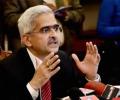
All members of the Monetary Policy Committee (MPC) -- Shashanka Bhide, Ashima Goyal, Jayanth R Varma, Mridul K Saggar, Michael Debabrata Patra and Shaktikanta Das -- had unanimously voted to keep the policy repo rate unchanged at 4 per cent after the three-day meet of the panel earlier this month. Further, except Varma, other members voted to continue with the accommodative stance as long as necessary to revive and sustain growth on a durable basis and continue to mitigate the impact of COVID-19 on the economy, while ensuring that inflation remains within the target going forward. Varma expressed reservations on this part of the MPC resolution, according to the minutes.
